Recent Posts
Archives
Top Posts & Pages
Join 15 other subscribers
Travelling around
The whole restaurant experience in Barcelona is somewhat different to in Sydney. Sometimes I just like a nice meal out… But in Barcelona, you really have to know where to go as most of the restaurants around where I live are geared towards tourists. I mean, you can’t just wander down the street and walk into a restaurant and expect good quality… What you can expect if you don’t know where to go is frozen paella, expensive tapas, and greasy things in a baguette.
I’ve been to nice restaurants and eaten good food with friends, but I just don’t stumble upon anything amazing myself – and I’m not partial to guide books – until, well it was over a year ago, I was exploring a part of town presumably while I was waiting for someone and stumbled across the Bangkok Café. I was first attracted to the street, it was gated and had nice little Paddington style terraces. At the end was the Bangkok Cafe, which just looked like the Asian food within would be authentic.
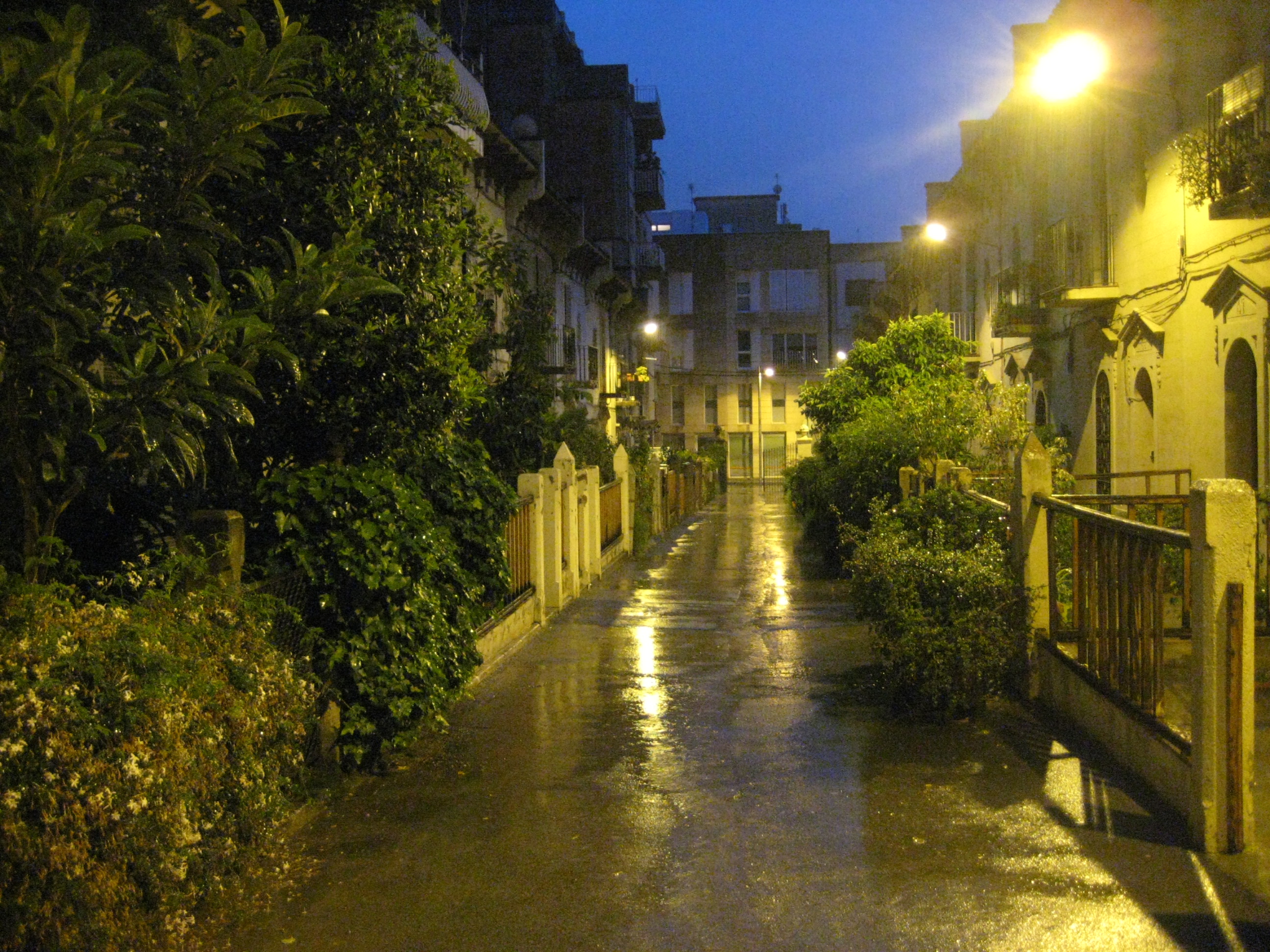
One of my favourite (residential) streets in Barcelona (May 2010). Bangkok Cafe at end (left).
That was May 2010, it’s taken me over 15 months for me to find it again and actually eat there, but I finally did. The Bangkok Café resembles a restaurant at home, with the same warm feeling. Warm? Actually the tables are that close to the hotplates it’s possible they’re trying to create a truly Thai ambience. I was sweating from the moment I entered.
I had to be difficult and request Pad Kee Mao, which wasn’t on the menu, but I’ve been craving some good Thai noodles for a while. The first waitress I asked told me “if it’s not on the menu, we don’t make it.” I told her it was really easy and if she could just ask the other (Thai looking) waitress, I’m sure I could have it… The second waitress explained that it’s not on the menu, but because it’s so easy, “we can do it.” I asked for extra spicy. And that’s what I got. I was literally in tears as I ate, my lips were burning, and I was worrying about the following morning… But it was so good.
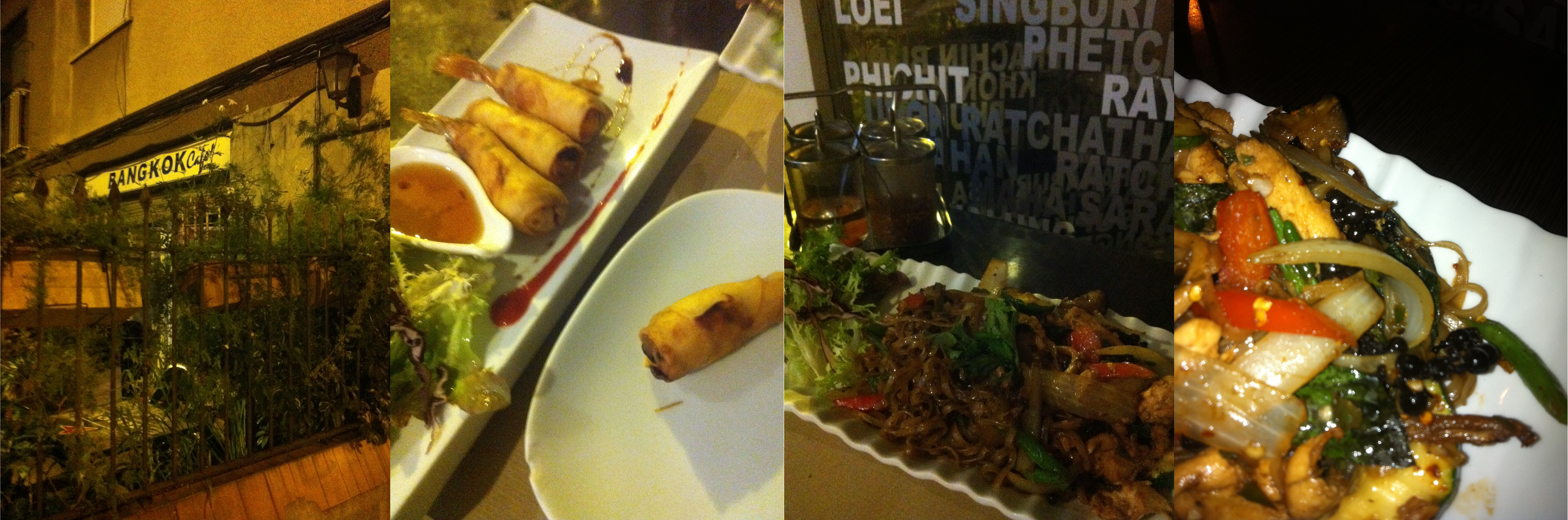
Yum
(I was fine the next day, by the way…)
Last week it was the time to wander around the streets of Gracia. Actually, it’s always a nice time to wander around the streets of Gracia – it’s got lots of cute bars, restaurants and shops and isn’t too commercial or touristic like much of Barcelona.
Gracia is a suburb of Barcelona that, previously being a town in its own right, continues to celebrate it’s own town party – most of Barcelona’s suburbs seem to do this at some point during the year, but the Fiesta’s de Gracia are, as one friend put it, an annual news piece along the lines of “Summer’s arrived, the Sun is shining and everyone is at the beach,” or “It’s only January and the stores are full of Easter eggs,” or… I can’t think of another one… “Housing is expensive in Sydney.” “It’s August, the Fiestas de Gracia have started and they’re really cool.” In short, they’re an annual fixture; without them Barcelona would be… I digress. Anyway, it wasn’t like this for me, being only my first experience.

Street scenes, Gracia
It reminded me of hot December nights parading past the Christmas light decorations of Bonnet Bay (for example…) though it’s a bit more fun with concerts in the squares, and whole streets decorated in themes, with little stages showing poetry or theatre or something… ha. Though these tended to be in Catalan, which proves somewhat difficult for an intermediate Spanish speaker.
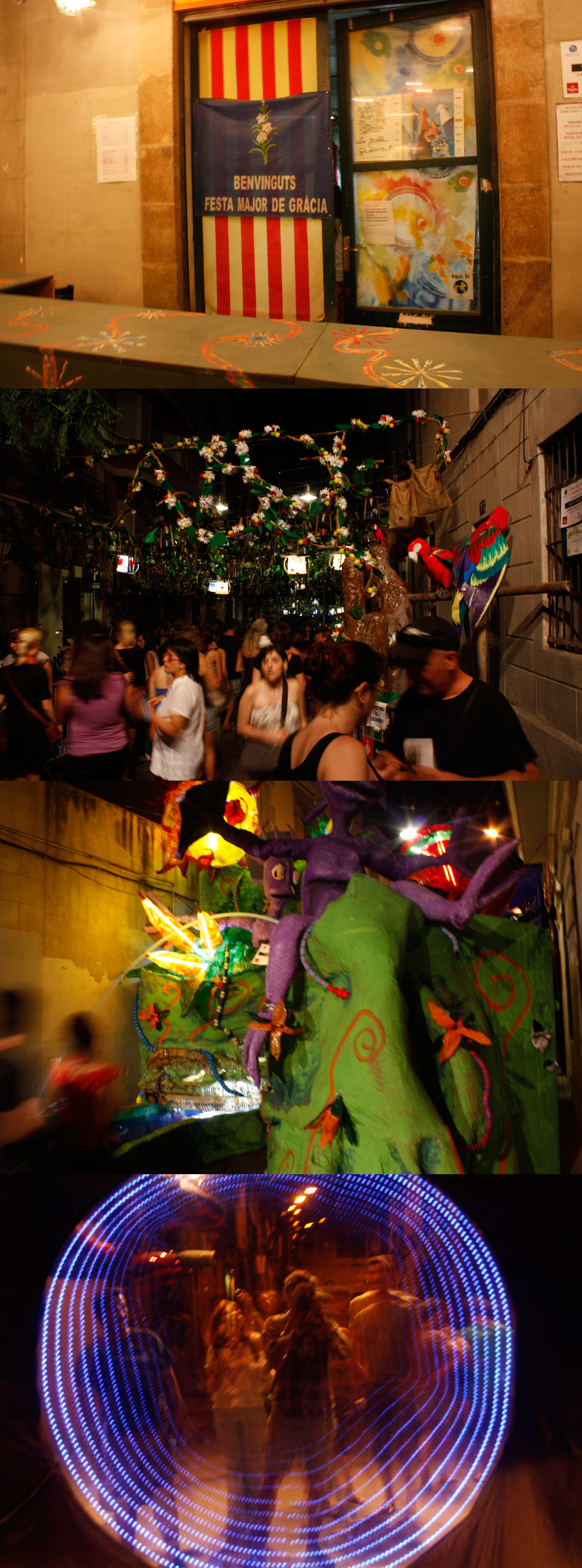
Welcome to the festivals of Gracia!
It’s a bit like walking around a large art gallery: you can purchase beer, wine, mojitos, etc. and just walk around enjoying the scene. Yes please! Drinks are sold in bars decorated into the street scenes. Prices ranged wildly however, and I always managed to be thirsty in an expensive street.
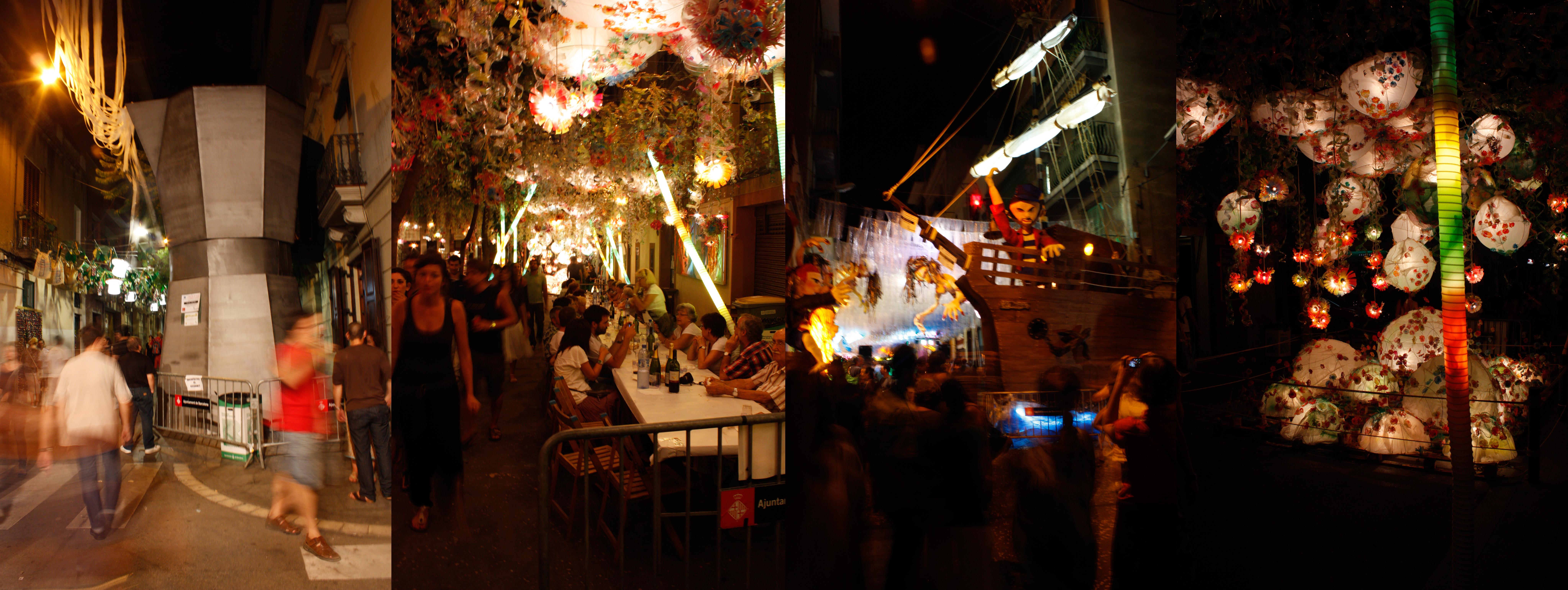
More lights!
I actually went three times, on Monday, Wednesday and Friday nights. I flew solo on Wednesday, which enabled me to take some nice photos. A tripod would have been handy for the night shooting, but I managed to keep my hands pretty steady for the 1+ seconds exposures.
There’s always a bit of harmless banter between two people of different nationalities. More so in Europe, it seems, and the weapon in Spain is food. Ah, that old chestnut. It always starts with a sly “what food is typical from Australia?” said in the knowledge that I’ll be searching the back of the pantry for an example, then a gleeful “you don’t really have your on cuisine, do you?” Yes, it keeps on popping up in conversations, and as my Spanish improves I get better at our defence. Truth is though, it’s really hard to defend your national cuisine when you only have Pavlova (to which New Zealand possibly has a better claim), and all the dishes in Possum Magic, though I’m hardly going to win a friendly argument with pumpkin scones and lamingtons. Let alone Vegemite.
If I do continue the discussion and argue that in my experience, Australians generally have a more diverse palate than any other culture I’ve seen, that our wine is pretty good (again a difficult discussion in Spain where you can buy a damn good Rioja for €5), and that we enjoy different methods of eating a selection of the world’s best culinary offerings and that Modern Fusion cuisine is likely an Australian invention, the retort goes something like “yes, but you don’t have your own tradition of cooking [the same dish over and over and over again]”. It’s like our grandmothers and our grandmother’s grandmothers simply didn’t cook. This ain’t true. And anyways, a whole lot of them brought their traditions from Europe and elsewhere.
I could argue about the sausage. Just about every country has it’s own sausage, so claiming a culinary tradition via the Chorizo is a bit weak, sure, it’s delicious but we know of Germany as the land of the sausage, and anyway we have the thick butcher’s snag. Everyone has their own sausage.
Anyways, before I got all defensive about Australian food, I was going to write about the making of my first tortilla de patatas. I kind of knew in my head how it was made, but had a quick look for an example on YouTube before heading to the market to buy the spuds and onion.

Prep.
Spanish tortilla is basically onion, potato, eggs, oil (lots and LOTS) and salt. You can add pepper if you like. That’s it if you wanna be traditional. I did want to be traditional, but I’ve eaten a whole lot of traditional tortilla here, and I thought it could be improved with a little of each of ground cinnamon and cumin. Not too much. The subtle result was pleasing, but I daren’t allow one of my traditionalist friends taste it…
You need all that oil to fry the diced onion and potato in until soft, this is also where I added the salt and non-traditional spices.

Getting there...
While the potatoes are bubbling away in the oil, you beat the eggs. I had no idea about quantities but the onion/potato/egg ratio in the photos is about right. Use as much oil as you want to fry the taters until they are soft. Then remove as much as you can so you feel less guilty. Combine the cooked potato and onion mixture with the eggs and stir a bit. Then put it into a deep non-stick 20∅ frypan. As the mixture is pretty warm already, cook slowly on low heat. When the egg is cooked up the sides a bit, you have to flip the whole thing over and cook the other side a bit. Use a plate. If I’m honest, I burnt the bottom a little (not pictured) so make sure you don’t have the burner up too high. Fact.
I reckon it’s nicer a bit runny in the middle.
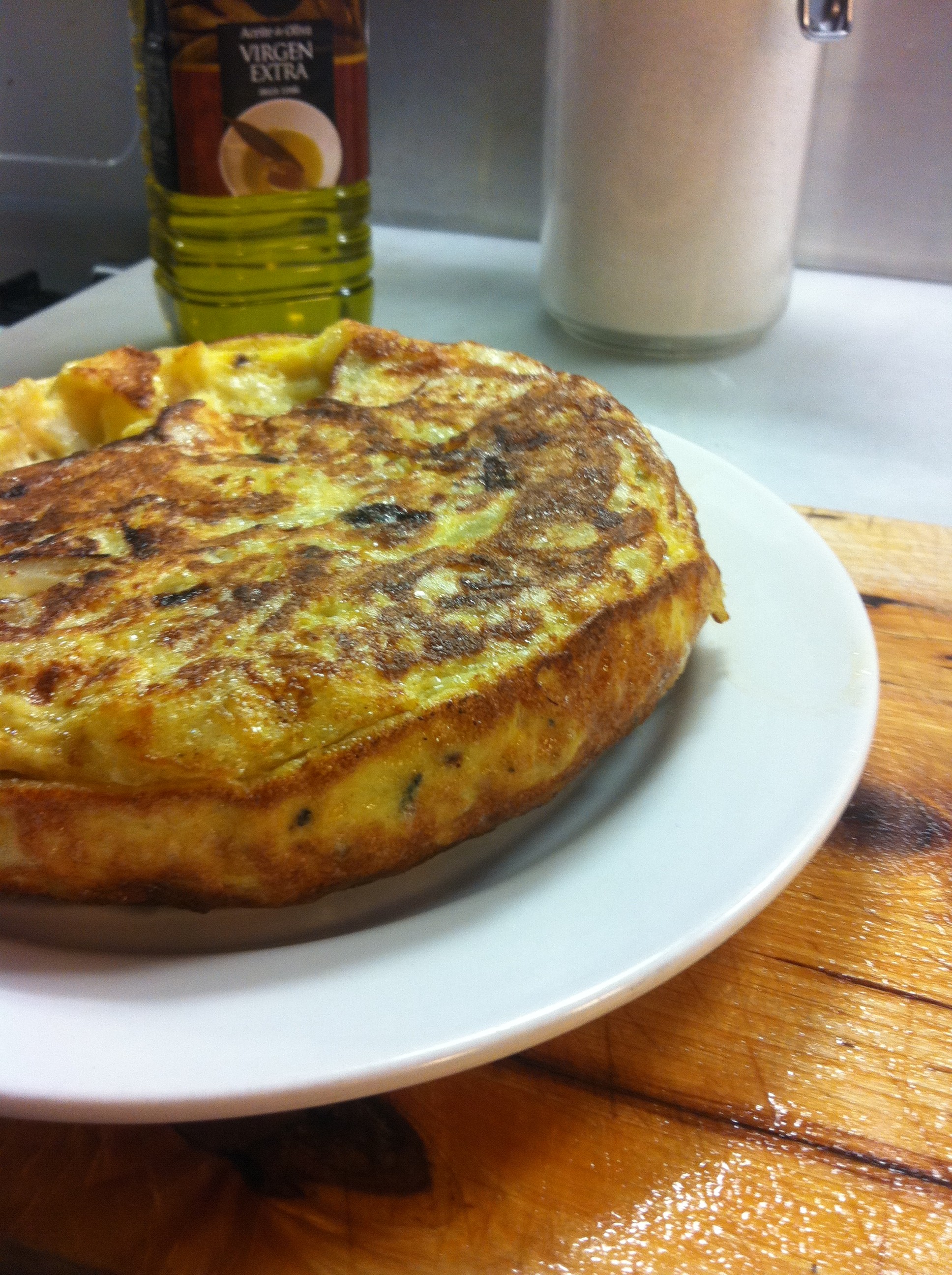
Tortilla de patatas! First try...
To be frank, I’m not sure of the traditional use for this dish. I’ve had it served as a tapa when I order a drink, I’ve ordered it as larger portion between a snack and a meal, I’ve seen it slapped in a baguette and served as a bocadillo (sandwich, carbohydrate bomb). Friends serve it with a whole lot of other hors d’oeuvres at drinks. Actually, it’s pretty versatile. I think it’s a perfect breakfast dish, though eating a big breakfast here is completely foreign. Too bad.
After deciding last year that 14 euro was too much to pay to enter Gaudí’s Sagrada Familia church, and getting home to Sydney and deeply regretting it, I wasn’t going to miss out this time. It’s not that 14 euro is that expensive, it’s that it’s a church, a one room monument dedicated to the lord. It took me nearly 3 months to go, when you live in a city you start to become complacent about the attractions – I can see the church from my back terrace and also from my building’s rooftop. Wikipedia says that the Basílica y Templo Expiatorio de la Sagrada Familia (Basilica and Expiatory Church of the Holy Family) was consecrated as a minor basilica, an interesting name for this quality of building.

Some detail...
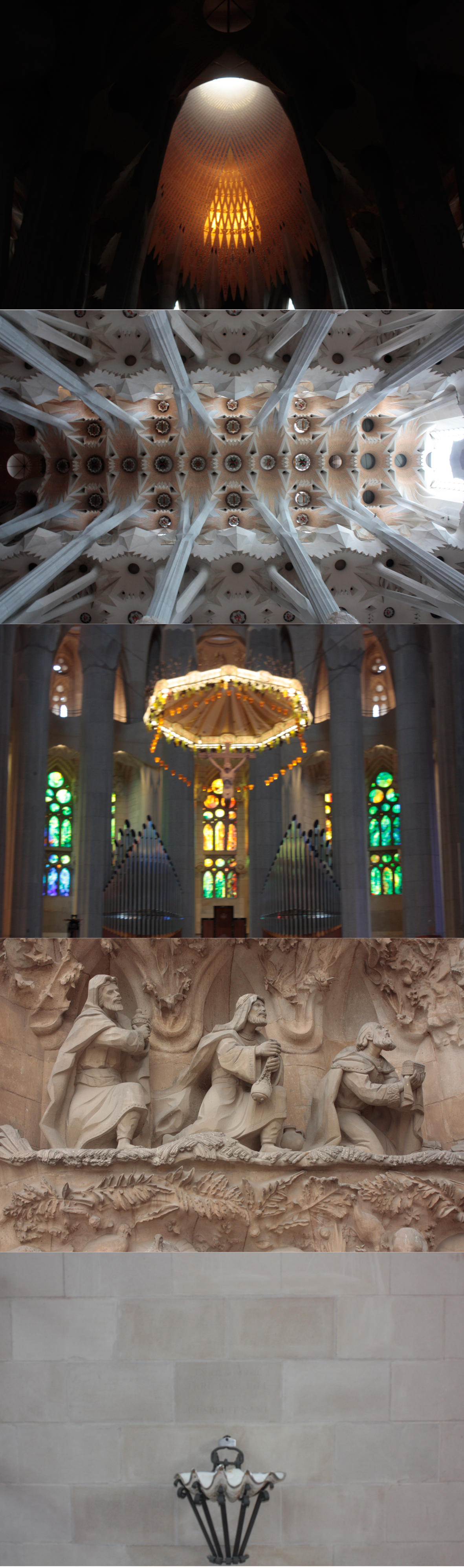
More detail...
Annnnnyway, it was about a month ago that I went to see the Sagrada Familia, and the other day, in order to inspire some blog writing, I decided to check out a modernist hospital at the other end of Avinguda Gaudí which runs diagonally from the Sagrada Familia to the hostpital’s entrance. Due to it marking the other end of a street named after Gaudí, I had wrongly assumed that the Hospital de la Santa Creu i Sant Pau was another of his masterpieces, it’s not. It’s designed by Lluís Domènech i Montaner who also designed the Palau de la Música Catalana, another building that I should share. Mega cool. The walk along Avinguda Gaudí is interesting – it’s hard to know whether or not the shops are named for Gaudí himself, or for the street. Probably a mixture of both, it’s hard to imagine the pious man endorsing the use of his name for a Salon de Jocs (essentially a gambling hall) or even an Internet cafe for that matter.
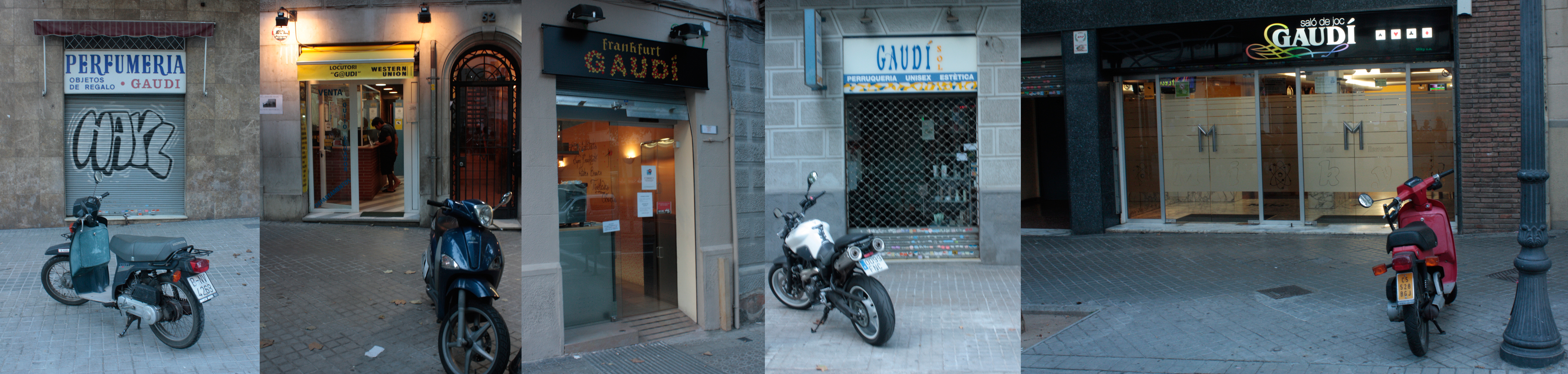
Tasteful without being Gaudí
The jury is out on Gaudí’s hairstylists (perruqueria).
After passing all shops Gaudí, I was disappointed to arrive at Hospital Sant Pau to find what is so common for older European monuments:
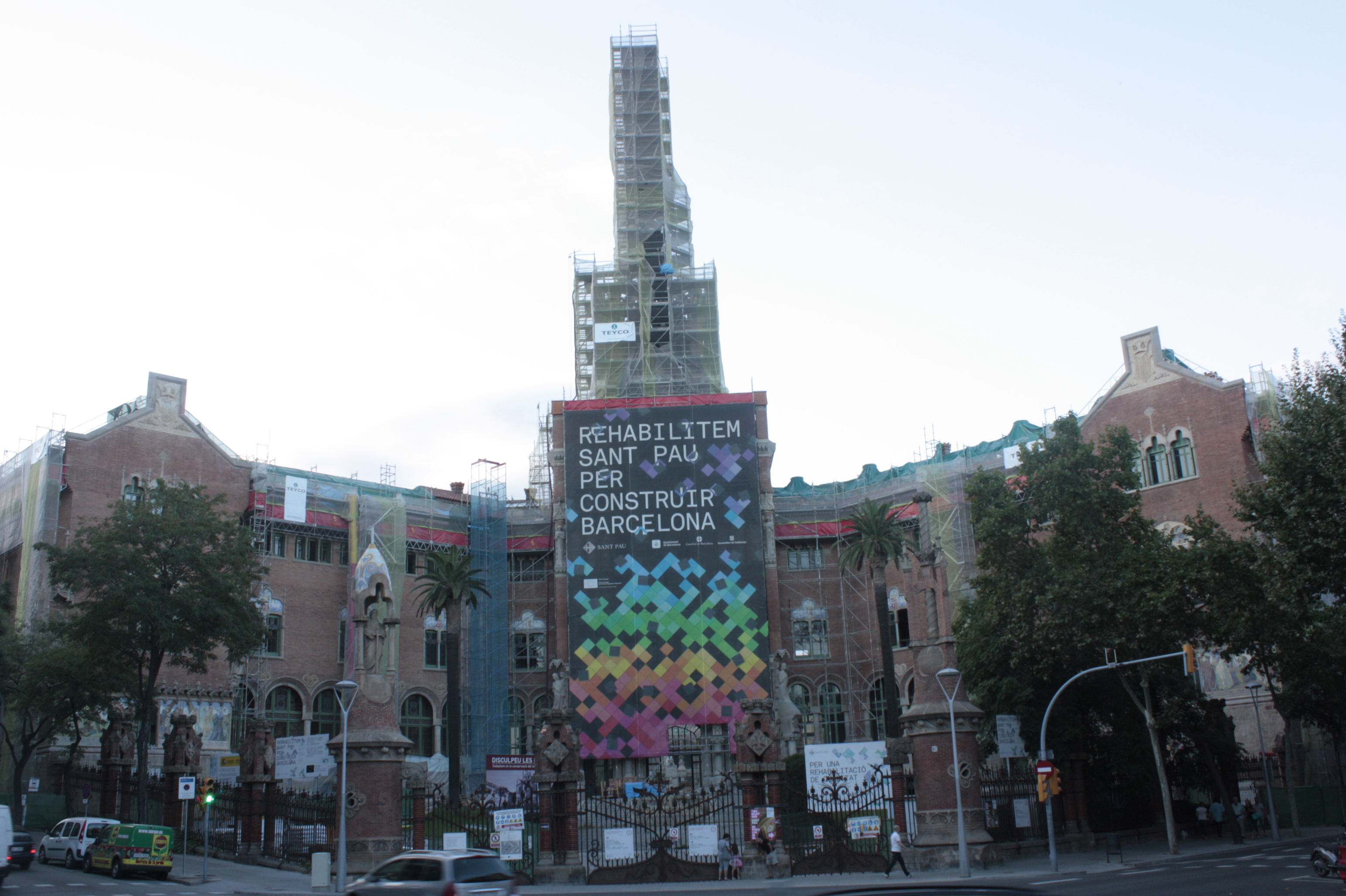
Renovations.
Renovations.
 marksabout